从存在的感受到生活界面


The following is the English version.
From the Sense of Existence to Living Interfaces
Part I
Wumusosō’s reflections on life began with a very personal question:
How can I feel my own existence?
For a long time, we looked to literature and philosophy for ways to understand this question. Camus’s Sisyphus° shows us that even when the world has no predetermined meaning, a person can still confront their existence through continuous action. But as we continued to question it, we came to realize that a sense of existence does not come only from inner contemplation.
How a person lives, what they do each day, and how they relate to the world around them all play a part in shaping how they experience their own existence. This initial question about individual existence has gradually become an ongoing question for Wumusosō:
What kind of society do we live in today?
How is this society changing the ways in which people relate to the world?
Modernization and Human Life
Modernization first changes the way society operates.
The continuous development of industry, cities, technology, infrastructure, and commerce has made many things possible with greater efficiency, while also giving people a wider range of movement and more choices. This is a result of the development of civilization. But when the ways in which things are accomplished change, so too do the ways in which people relate to the world.
Labor, making, repairing, caring, walking, waiting, and cooperation between people are all changing. Some relationships have been replaced by new technologies and social systems; some have been reorganized; while others continue to exist in new forms.
This leads us to reconsider a very concrete question:
Through what does a person engage with the world in their everyday life?
Looking Back at Modernization from the Present
Following this question further, we began to reconsider the changes taking place in China today, while also looking back at the processes of modernization that other societies had experienced in the past.
An important entry point into this history for us was Mono-ha in Japan. What initially drew our attention was Mono-ha’s understanding of the relationships between materials, objects, and space. More importantly, as we continued to examine the historical context in which it emerged, we found that it did not appear in isolation. Rather, it emerged during a period of rapid modernization and profound changes in Japan’s social structure.
In the late 1960s, Japan was experiencing a period of rapid economic growth. Industrialization, urbanization, mass consumption, and new ways of living were rapidly transforming society. Artists such as Nobuo Sekine°, Lee Ufan, and Kishio Suga began to reconsider wood, stone, earth, iron, glass, space, and human perception.This led us to look further back, toward a broader and earlier history of modernization.
From the latter half of the 1960s, young people in Japan began to reflect critically on “modernization.” By the end of the decade, student movements, anti-war movements, and movements challenging established political and social structures had become highly active.In 1960, the Anpo Struggle emerged around opposition to the revision of the Japan–U.S. Security Treaty. Around 1968–69, large-scale student movements erupted on university campuses across Japan.
At the same time, similar movements were taking place around the world:
* The anti–Vietnam War movement in the United States
* The student movements of 1968 in Europe
* The civil rights movement and growing criticism of consumerism
* A broader questioning of capitalism and industrial society
Young people began to ask:
Does economic growth really mean progress for human beings?
This question had an important intellectual and spiritual connection with the emergence of Mono-ha. At the same time, profound changes were also taking place in the West.
Following the Industrial Revolution in nineteenth-century Britain, machine production transformed labor, making, and everyday life. In response, Britain saw the emergence of the Arts and Crafts Movement.
Arts and Crafts reopened the discussion around the relationship between making, labor, and everyday life. Its leading figure, William Morris, opposed mass-produced goods of poor quality and sought to restore the connections between materials, craftsmanship, making, and everyday life.The movement emerged in Britain and later influenced Europe and the United States.
At the beginning of the twentieth century, the Bauhaus sought to find living environments suited to a new era in the face of industrial production, new materials, and the modern city. The question confronting the Bauhaus was: if industrialization was impossible to avoid, could art and design enter industrial production rather than withdraw from it?
After the Second World War, as urbanization and consumer society developed, European thought, art, and design once again turned their attention toward everyday life. Research into everyday life in France, Situationism, as well as Italy’s Radical Design and Arte Povera, each approached, from different perspectives, the relationships between people and objects, space, materials, and everyday life.
In Japan, Mono-ha likewise confronted objects, environments, and human perception within its own social context. These movements did not arrive at a common answer, nor were they continuations of a single line of thought. But when we place them back within their respective historical periods, we begin to see a question that repeatedly emerges:
When society changes the conditions of human life, people also reconsider their relationship with the world.
This led us to realize that modernization is not simply a transformation of modes of production, urban forms, and technological systems. It also enters into everyday life. It changes how people work, how they make, how they move, and how they consume. It changes how people use time, space, and objects. And in every era, people may respond to these changes from within the conditions of their own lives.
The Present We Live In
Today, two things are happening in China at the same time.
On the one hand, modernization continues to penetrate everyday life at a rapid pace. On the other hand, the reflections on modernization that have developed around the world over the past several decades are being rediscovered and are entering contemporary life in China.
The “problems” and the “solutions” are appearing at the same time.
First
In the 1920s and 1930s, the Bauhaus, as part of the German modernist movement, was itself part of the processes of modernization and industrialization. The modern design system it established is now widely present in architecture, spatial design, and products in China, and has gradually become a new aesthetic standard.
Second
From the 1920s to the 1960s, Nordic modernism and functionalism were themselves responses to ways of living that had emerged after industrialization. Today, they have once again become important references for contemporary living and residential spaces in China, entering people’s imagination of an “ideal life.”
Third
From the 1920s to the 1960s, the Japanese Mingei movement responded to industrialization and standardized production by turning its attention back to handicrafts, local materials, old objects, and everyday utensils.
Today, China is also rediscovering these things. Handicrafts, local materials, old furniture, traditional houses, tea, and everyday objects are gradually returning to contemporary life.
Fourth
In the 1960s and 1970s, Europe saw a growing critique of modern consumer society. Anti-design, anti-consumerism, and experiments in community-based living once sought alternatives to the mainstream industrialized way of life.
Today, some similar tendencies can also be seen among young people in China: independent spaces, small shops, handmade production, and renewed choices about how to live everyday life.
Fifth
Japan’s postwar rediscovery of traditional ways of living is also entering China today through old houses, tea, crafts, old furniture, and local cultures.
Sakata Kazuya is a particularly concrete example. Through his collection, research, and introduction of old folk objects, antique tools, and everyday utensils, he brought objects that once belonged to ordinary life back into the field of contemporary attention.
Today, this way of looking is also influencing how China understands old objects, traditional houses, Mingei, and ways of living.
And there are many other examples.
These things are appearing together today not because they belong to the same tradition, nor because China is simply reproducing the past. Rather, it is because different responses that various societies developed in the face of modernization are now being brought back into the present.
The Bauhaus design system, Nordic approaches to living, the Japanese Mingei movement’s attention to everyday objects, Europe’s reflections on consumer society, and Japan’s rediscovery of traditional ways of living—
they originally emerged in different periods and under different social conditions. Yet today, they can all enter into a single person’s life at the same time.
This is one of the particular characteristics of the present.
We are no longer limited to a single, clearly defined path toward modernization. The experiences left behind by different societies in the past can be seen again, used again, and brought into new relationships with the conditions of life today.
But when these past experiences enter the present, they are no longer simply what they once were. They are reinterpreted, selectively adopted, and transformed.
The present we live in is becoming an environment in which different experiences can emerge simultaneously, encounter one another, and continue to grow.
Wumusosō, too, is growing within this environment.
The State of Wumusosō
Wumusosō’s production base is in Shaoxing.
We have long moved between Hangzhou and Shanghai, established a seasonal space in Dali, and have also begun living and working in Kyoto. These places are at different stages of development and have different rhythms of life, social structures, and natural environments.
Shanghai
Its urban systems are highly developed, representing a highly modernized form of urban life.
Hangzhou
It is in a period of continued expansion and rapid restructuring of modernization.
Shaoxing
Our production base is located in a rural area. It carries traces of rural life while also being situated within the highly modernized urban network of the Yangtze River Delta.
Dali
It is a place where modernization, local ways of life, tourism, and new forms of migration intersect.
Kyoto
It provides another point of reference: even after a long process of modernization, certain forms of local life and everyday order can continue to exist.
These places, each situated within different stages and conditions of modernization, do not provide us with a standard answer. For us, what matters is not to compare them.
Rather, across these different environments, we repeatedly encounter the same thing:The conditions of an environment and society enter into everyday life, and they also change the ways in which people relate to the world.
Wumusosō’s research has gradually taken shape through these lived experiences.
Wumusosō’s Response
We return once again to the question with which we began:
How can I feel my own existence?
After years of living, making, and observing, we have begun to turn our attention toward some very ordinary states of everyday life: reading, drinking tea, waiting, arranging, repairing, walking, being alone, eating, cleaning, making…
They come from different traditions of living, yet they all exist within everyday life today.
Gradually, we began to see something they have in common:
In each of these states, a person enters into a relationship with the world.
Within these relationships, a person invests their body, time, attention, perception, and judgment. The world responds, and the person responds in turn. A person acts. The world responds. It is through this continuous back-and-forth that relationships take place. As these relationships continue to unfold, a person gradually develops a sense of materials, time, space, others, and themselves.The original question—“How can I feel that I exist?”—therefore begins to take on a new direction.
We began to realize that, throughout their long histories, different civilizations have developed countless ways for people to establish relationships with the world.They do not necessarily share the same objects, nor do they necessarily take the same forms. Yet all of them create particular ways for people to enter into relationships with the world.These relationships continue to change as society develops. Some remain in existence; some can re-enter life today; and new social conditions give rise to new relationships.This led us to ask:
What kinds of relationships in everyday life can continue to shape the human being?
We want to study how these relationships are formed, how they continue to take place through everyday life, how they affect human experience, and ultimately, how they participate in the formation of the human being.
We call these states in which people establish relationships with the world:
Living Interfaces | 生活界面
Living Interfaces is a research response by Wumusosō to the society and ways of living we face today.
Through it, we hope to reconsider the experiences of living left behind by different civilizations, while also observing the forms of life that are emerging today.
And we want to ask further:
Within a constantly changing modern society, what relationships between people and the world are still worth sustaining?
This became the starting point of Wumusosō’s Living Interfaces Theory.
Part II
LIVING INTERFACES
A Theory of Civilization, Practice and Human Formation
Beginning with a Question
In the first part, we began with a very personal question:
How can I feel my own existence?
After looking back at modernization and the changes experienced by different societies, we gradually extended this question from the sense of individual existence to human life itself.
We came to realize that human existence does not take place in isolation. Every day, people establish relationships with time, space, materials, others, and themselves.
Different ways of living also mean that different kinds of relationships are continually brought into a person’s life.
This led us to ask further:
What kinds of relationships in everyday life can continue to shape the human being?
This became the starting point for Wumusosō’s continued research into Living Interfaces.
-
Preface
The central question that Wumusosō has been exploring is Human Formation.
How is human existence formed?
We believe that human existence is not a state given in advance. A person gradually comes to feel their own existence through the continuous process of establishing relationships with time, space, materials, others, and oneself in everyday life.
When we observe different civilizations, we find that although they have developed different languages, religions, institutions, and objects, they have also created something in common.Not the same objects.Not the same forms.But ways in which people establish relationships with the world.
Reading, drinking tea, waiting, arranging, repairing, walking, being alone, eating, cleaning…
These states of everyday life, through their long-term and repeated occurrence, continually allow people to experience their own existence.Through long periods of practice, adjustment, and continuation, these relational states continue to shape the ways people live, and in turn, continue to shape the human being.
We call these relational states Living Interfaces.
Living Interfaces Theory is Wumusosō’s attempt to understand how these interfaces of everyday life are formed, how they continue, and ultimately, how they shape the human being.
In the following sections, we will explain several key concepts and, through them, attempt to make Wumusosō’s work and its underlying research understandable.
-
Living Interfaces | 生活界面
What Are Living Interfaces?
A Living Interface is a state in which a person continuously establishes a relationship with the world.
It is not an object, not an action, not a form, and not an idea. It is a state in which a person remains in an ongoing relationship with the world.
Reading is a Living Interface.
Drinking tea is a Living Interface.
Waiting, arranging, repairing, walking, being alone, eating, and cleaning are also Living Interfaces.
Life is not simply the accumulation of events. Rather, it unfolds through the continuous process of entering into different Living Interfaces.
Yet a Living Interface requires a sequence of actions to take place. We call these concrete actions Living Practice.
-
Living Practice | 生活实践
What Is Living Practice?
We call the continuous sequence of concrete actions that supports a Living Interface Living Practice.
Reading is a Living Interface. Turning pages, looking closely, thinking, pausing, and taking notes are different but continuous actions that together sustain the experience of reading as a Living Interface.
The same is true of drinking tea. Boiling water, warming the teapot, adding tea leaves, waiting, pouring water, and drinking are Living Practices that together sustain the Living Interface of drinking tea.
A Living Interface is a state in which a person establishes a relationship with the world.
Living Practice consists of the concrete actions that sustain this relational state.
Only when Living Practice continues to take place can a Living Interface continue to exist.
At the same time, actions and states always take place through concrete media.
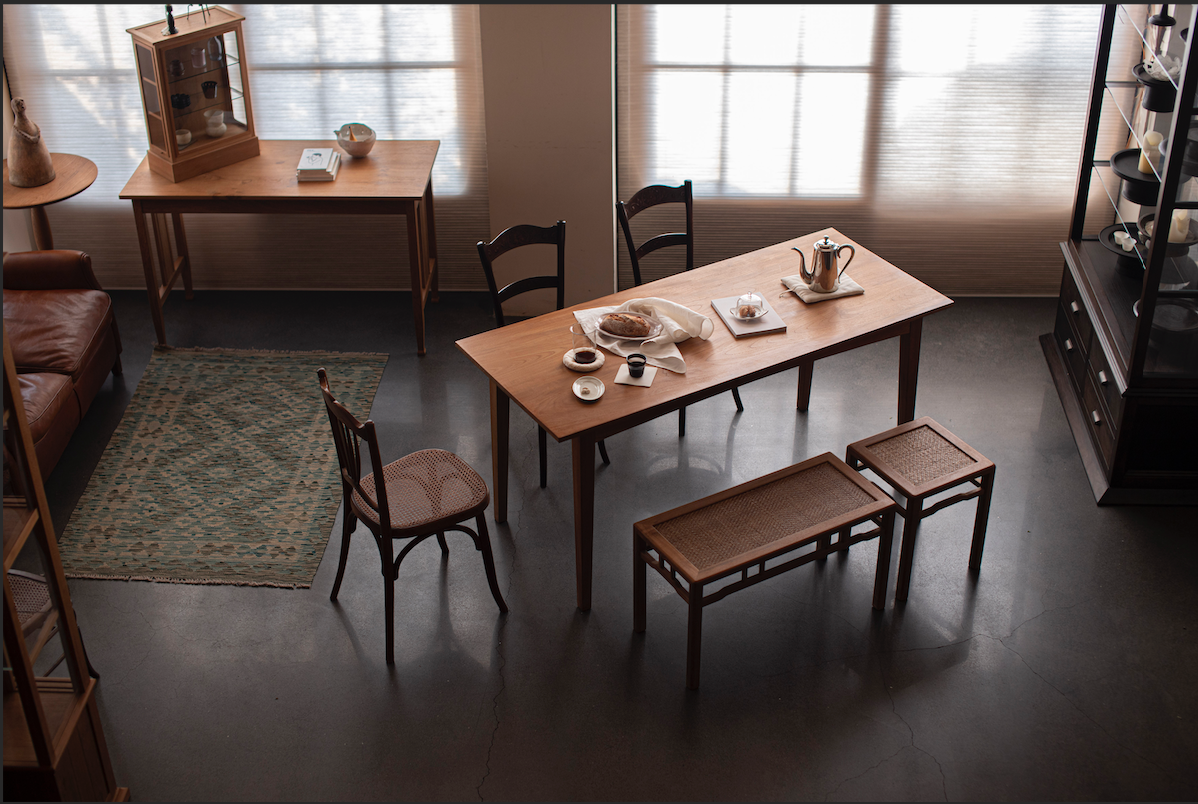
A table for reading, or a jar for storing tea, can become carriers of a Living Interface.
A table that enables a person to enter more fully into a Living Interface, therefore, becomes something particularly valuable.
-
Medium | 媒介
A Living Interface does not exist in the abstract. It always takes place through a concrete medium.
Different media carry different kinds of information, and these differences allow Living Practice to unfold with different depths. A medium is not simply a passive tool that carries practice; it is itself part of the conditions through which practice is formed.
Material, structure, proportion, touch, weight, traces of making, and the changes left by time together constitute the information contained within a medium.
These forms of information allow a continuous relationship to develop between people and the medium.
Therefore:
A medium does not merely carry Living Practice. It also influences the possibilities and the depth with which Living Practice can unfold.
Different periods produce different ways for people to establish relationships with the world.
For Wumusosō, making is therefore not primarily about creating forms. It is a way of researching the mediums of our time.
We ask:
Does the material express itself truthfully?
Does the structure respond to long-term use?
Does the craft preserve the judgments made during the process of making?
Can the object change together with a person’s life as time passes?
Only when the medium itself possesses sufficient depth and richness can it support deeper forms of Living Practice.
This is the kind of medium Wumusosō seeks to make.
-
Starting with Wood
Wumusosō always begins with the mediums it has practiced with over a long period of time and come to understand through direct experience.
Wood is currently Wumusosō’s primary medium for researching Living Interfaces. This choice comes from Chen Jie’s long-standing and genuine relationship with wood. Furniture has therefore become the primary medium through which Wumusosō currently explores Living Interfaces through wood.
Through wood and furniture, we continue to study how a medium carries Living Practice, as well as the relationships between people, materials, the body, space, and time.
-
Sensibility | 感受力
Why Can Living Interfaces Shape the Human Being?
Living Interfaces do not directly change a person.
As people continuously enter into different Living Interfaces, they gradually develop Sensibility through sustained Living Practice.
Sensibility is not an innate gift. It is a capacity that is continually formed through life.
Different Living Interfaces give rise to different Living Practices.
Different Living Practices shape different forms of Sensibility.
And different forms of Sensibility, in turn, shape different human beings.
The richer a person’s capacity to establish relationships with the world, the richer their Sensibility becomes.
In this way, human existence continues to deepen.
-
Existence | 存在
What Is Existence?
Existence is not an abstract philosophical concept. It is something that can be genuinely experienced.
A person does not experience existence through abstract thought. Rather, through continuously entering Living Interfaces, engaging in Living Practice, and establishing relationships with the world, a person gradually comes to feel their own existence.
Existence is not the starting point of life.
It is the result of Living Practice taking place continuously over time, together with the accumulation of experience and Sensibility.
-
Wumusosō | Research
Not every Living Interface is worth continuing.
Living Interfaces Theory seeks to understand how different Living Interfaces shape the human being. We continue to study those Living Interfaces that cultivate Sensibility and continue to shape the human being over time.
We believe that a person does not grow simply by completing a task.
Rather, it is through Living Practice that a person continuously establishes relationships with time, space, materials, others, and oneself, gradually forming Sensibility.
For this reason, we continue to pay attention to reading, meditation, drinking tea, waiting, arranging, walking, being alone, eating, and all other Living Interfaces that can continue to shape a person through direct, embodied practice.
In responding to life today, we also need to make choices continuously.
Some Living Interfaces that developed in the past still hold value and can be reinterpreted and brought back into contemporary life.
At the same time, new social conditions may give rise to new Living Interfaces.
What we choose to bring into our own lives is also a choice about what will act upon us over the long term.
This choice itself has become part of Wumusosō’s ongoing research into
Living Interfaces.
-
Wumusosō | Making
Living Interfaces Theory is an ongoing research project of Wumusosō.
Wumusosō responds to this research through making.
We do not manufacture Living Interfaces. A Living Interface is not directly created by an object. It is formed through human practice.
However, practice requires a medium.
Therefore, the significance of making lies in creating mediums that can support Living Practice.
Through the making of materials, structures, craft, and spaces, Wumusosō explores what kinds of mediums can sustain the relationships continuously formed between people and the world.
We believe that the quality of a medium determines the depth to which Living Practice can unfold.
Making is not the goal. It is a method of research.
Through making, we come to understand how materials, through human practice, become mediums that carry Living Interfaces. We also explore what kinds of mediums make Living Interfaces more likely to occur.
Through making, we hope to allow those Living Interfaces that are worth continuing and capable of cultivating Sensibility to continue taking place today—and to continue shaping the human being.
-
Returning to Existence
Ultimately, this research returns to the question with which it began:
How can I feel my own existence?
As a person continuously enters Living Interfaces, engages in Living Practice, and establishes relationships with time, space, materials, others, and oneself, Sensibility gradually takes shape, and through it, one gradually comes to feel one’s own existence.
What Living Interfaces is concerned with are precisely these relationships that take place within everyday life.
They are ordinary, yet they continue to exist.
They do not necessarily create new ways of living. But they may change how we live, and how we experience ourselves.
We do not simply live.
We also gradually form ourselves through living, and come to feel our own existence.
This became the original question of Wumusosō’s
Living Interfaces Theory, and it remains the question that we continue to explore:
How can I feel my own existence?
-
Wumusosō
Autumn, Year of Bingwu
Voici la version française.
Du sentiment d’exister aux interfaces du quotidien
Première partie
La réflexion de Wumusosō sur la vie est née d’une question très personnelle :
Comment puis-je ressentir ma propre existence ?
Pendant longtemps, nous avons cherché dans la littérature et la philosophie des manières de comprendre cette question. Le Sisyphe° de Camus nous montre que, même si le monde n’a pas de sens prédéfini, l’être humain peut néanmoins faire face à son existence à travers une action continue.
Mais en poursuivant cette réflexion, nous avons découvert que le sentiment d’exister ne vient pas seulement de la pensée intérieure.
La manière dont une personne vit, ce qu’elle fait au quotidien, ainsi que la façon dont elle entre en relation avec le monde qui l’entoure participent également à la construction de son propre sentiment d’existence.
Cette question initiale sur l’existence individuelle est progressivement devenue une question que Wumusosō continue d’explorer :
Dans quelle société vivons-nous aujourd’hui ?
De quelle manière cette société transforme-t-elle les façons dont les êtres humains entrent en relation avec le monde ?
Modernisation et vie humaine
La modernisation transforme d’abord les modes de fonctionnement de la société.
Le développement continu de l’industrie, des villes, des technologies, des infrastructures et du commerce permet d’accomplir de nombreuses choses plus efficacement, tout en élargissant le champ d’action des individus et en leur offrant davantage de choix. C’est l’un des résultats du développement de la civilisation.
Mais lorsque les manières d’accomplir les choses changent, les façons dont les êtres humains entrent en relation avec le monde changent elles aussi.
Le travail, la fabrication, la réparation, le soin, la marche, l’attente, ainsi que la coopération entre les individus, sont tous en transformation. Certaines relations ont été remplacées par de nouvelles technologies et de nouveaux systèmes sociaux ; certaines ont été réorganisées ; d’autres continuent d’exister sous de nouvelles formes.
Nous en venons ainsi à réexaminer une question très concrète :
Par quoi une personne entre-t-elle en relation avec le monde dans sa vie quotidienne ?
Regarder la modernisation depuis le présent
En poursuivant cette question, nous avons commencé à porter un nouveau regard sur les transformations qui se produisent aujourd’hui en Chine, tout en revenant sur les processus de modernisation que d’autres sociétés avaient traversés auparavant.
Pour nous, une entrée importante dans cette histoire a été le Mono-ha au Japon. Ce qui nous a d’abord attirés était la manière dont le Mono-ha appréhendait les relations entre les matériaux, les objets et l’espace. Plus important encore, en approfondissant le contexte historique de son émergence, nous avons découvert qu’il n’était pas apparu de manière isolée, mais dans une période de modernisation rapide du Japon et de profondes transformations de sa structure sociale.
À la fin des années 1960, le Japon connaissait une période de forte croissance économique. L’industrialisation, l’urbanisation, la consommation de masse et de nouveaux modes de vie transformaient rapidement la société.
Des artistes tels que Nobuo Sekine°, Lee Ufan et Kishio Suga ont commencé à porter un nouveau regard sur le bois, la pierre, la terre, le fer, le verre, l’espace ainsi que sur la perception humaine.
Cela nous a conduits à remonter plus loin dans le temps, à la recherche d’une histoire plus ancienne et plus vaste de la modernisation.
À partir de la seconde moitié des années 1960, les jeunes Japonais ont commencé à remettre en question la « modernisation ».À la fin de la décennie, les mouvements étudiants, les mouvements pacifistes et les mouvements de contestation de l’ordre politique et social étaient particulièrement actifs au Japon.En 1960, les luttes contre la révision du traité de sécurité entre le Japon et les États-Unis, connues sous le nom de luttes de l’Anpo, ont mobilisé une partie importante de la société japonaise. Vers 1968-1969, de vastes mouvements étudiants ont éclaté dans les universités japonaises.
Au même moment, des mouvements similaires se développaient dans différentes régions du monde :
* Le mouvement contre la guerre du Vietnam aux États-Unis
* Les mouvements étudiants européens de 1968
* Le mouvement des droits civiques et la critique croissante de la société de consommation
* Une remise en question du capitalisme et de la société industrielle
Les jeunes générations ont commencé à se demander :
La croissance économique signifie-t-elle réellement un progrès pour l’être humain ?
Cette question présente une importante résonance intellectuelle et spirituelle avec l’émergence du Mono-ha. Parallèlement, de profondes transformations étaient également à l’œuvre en Occident.
Après la révolution industrielle britannique du XIXe siècle, la production mécanisée transforma le travail, la fabrication et la vie quotidienne. En réaction à ces transformations, le mouvement Arts and Crafts — le mouvement des Arts and Crafts — se développa en Grande-Bretagne.
Le mouvement Arts and Crafts contribua à remettre au centre du débat les relations entre la fabrication, le travail et la vie quotidienne.
Son principal fondateur, William Morris, s’opposait à la production de masse de mauvaise qualité et cherchait à renouer les liens entre les matériaux, le travail artisanal, la fabrication et la vie quotidienne.
Né en Grande-Bretagne, le mouvement exerça ensuite une influence importante en Europe et aux États-Unis.
Au début du XXe siècle, le Bauhaus, face à la production industrielle, aux nouveaux matériaux et à la ville moderne, chercha à imaginer des environnements de vie adaptés à une nouvelle époque.
La question à laquelle le Bauhaus était confronté était la suivante :
Si l’industrialisation est impossible à éviter, l’art et le design peuvent-ils entrer dans la production industrielle plutôt que de s’en détourner ?
Après la Seconde Guerre mondiale, avec le développement de l’urbanisation et de la société de consommation, la pensée, l’art et le design européens se sont de nouveau tournés vers la vie quotidienne.
Les recherches françaises sur la vie quotidienne, le situationnisme, ainsi que le Radical Design et l’Arte Povera en Italie, ont chacun abordé, depuis des perspectives différentes, les relations entre les êtres humains, les objets, l’espace, les matériaux et la vie quotidienne.
Au Japon, le Mono-ha a lui aussi réinterrogé les objets, l’environnement et la perception humaine dans son propre contexte social.
Ces mouvements n’ont pas apporté une réponse commune et ne constituent pas non plus la continuité d’une même pensée. Mais lorsqu’on les replace dans leurs contextes historiques respectifs, une question récurrente commence à apparaître :
Lorsque la société transforme les conditions de vie des individus, ceux-ci réinterrogent à leur tour leur relation au monde.
Cela nous a conduits à prendre conscience que la modernisation ne se résume pas à une transformation des modes de production, des formes urbaines et des systèmes technologiques. Elle pénètre également dans la vie quotidienne.
Elle transforme la manière dont les êtres humains travaillent, fabriquent, se déplacent et consomment. Elle transforme également leur manière d’utiliser le temps, l’espace et les objets.
Et à chaque époque, les individus peuvent eux aussi répondre à ces transformations à partir des conditions concrètes de leur propre vie.
Le présent dans lequel nous vivons
Aujourd’hui, deux phénomènes se produisent simultanément en Chine.
D’un côté, la modernisation continue de pénétrer rapidement dans la vie quotidienne. De l’autre, les réflexions sur la modernisation qui se sont développées dans le monde au cours des dernières décennies sont redécouvertes et entrent à leur tour dans la vie contemporaine en Chine.
Les « problèmes » et les « réponses » apparaissent ainsi en même temps.
Premier exemple
Dans les années 1920 et 1930, le Bauhaus, au sein du mouvement moderniste allemand, faisait lui-même partie du processus de modernisation et d’industrialisation.
Le système du design moderne qu’il a établi est aujourd’hui largement présent dans l’architecture, les espaces et les produits en Chine, et contribue progressivement à former une nouvelle norme esthétique.
Deuxième exemple
Des années 1920 aux années 1960, le modernisme nordique et le fonctionnalisme constituaient eux aussi des réponses aux nouveaux modes de vie issus de l’industrialisation.
Aujourd’hui, ils sont redevenus des références importantes pour les espaces résidentiels et les modes de vie contemporains en Chine, et participent à l’imaginaire d’une « vie idéale ».
Troisième exemple
Des années 1920 aux années 1960, le mouvement Mingei au Japon, face à l’industrialisation et à la standardisation de la production, porta de nouveau son attention sur l’artisanat, les matériaux locaux, les objets anciens et les objets du quotidien.
Aujourd’hui, la Chine redécouvre elle aussi ces choses.
L’artisanat, les matériaux locaux, les meubles anciens, les maisons traditionnelles, le thé et les objets du quotidien réintègrent progressivement la vie contemporaine.
Quatrième exemple
Dans les années 1960 et 1970, une réflexion critique sur la société de consommation moderne s’est développée en Europe.
L’anti-design, l’anticonsumérisme et les expérimentations de vie communautaire cherchaient alors à explorer des manières de vivre différentes du modèle industriel dominant.
Aujourd’hui, on peut également observer certaines tendances comparables dans la vie des jeunes générations en Chine : espaces indépendants, petites boutiques, fabrication artisanale et nouveaux choix concernant les manières de vivre au quotidien.
Cinquième exemple
La redécouverte des modes de vie traditionnels au Japon après la Seconde Guerre mondiale entre également aujourd’hui en Chine à travers les maisons anciennes, le thé, l’artisanat, les meubles anciens et les cultures locales.
Sakata Kazumi en constitue un exemple particulièrement concret.
À travers la collection, l’étude et la présentation d’anciens objets populaires, d’objets anciens et d’ustensiles du quotidien, il a permis à des objets autrefois associés à la vie ordinaire de redevenir des objets du regard contemporain.
Aujourd’hui, cette manière de regarder influence également la façon dont la Chine contemporaine comprend les objets anciens, les maisons traditionnelles, le Mingei et les modes de vie.
Et ce ne sont là que quelques exemples parmi d’autres.
Si ces différentes choses apparaissent aujourd’hui en même temps, ce n’est pas parce qu’elles appartiennent à une même tradition, ni parce que la Chine serait simplement en train de reproduire le passé.
C’est plutôt parce que les différentes réponses que diverses sociétés ont développées face à la modernisation sont aujourd’hui réintroduites dans le présent.
Le système de design du Bauhaus, les manières d’habiter nordiques, l’attention portée par le Mingei japonais aux objets du quotidien, la réflexion européenne sur la société de consommation et la redécouverte, au Japon, des modes de vie traditionnels —
tous ces phénomènes sont nés à des époques différentes et dans des conditions sociales différentes. Pourtant, aujourd’hui, ils peuvent entrer simultanément dans la vie d’une même personne.
C’est aussi ce qui rend notre présent particulier.
Nous ne sommes plus limités à une seule voie clairement définie de la modernisation.
Les expériences laissées par différentes sociétés du passé peuvent être redécouvertes, réutilisées et mises en relation avec les conditions de vie du présent d’une manière nouvelle.
Mais lorsque ces expériences du passé entrent dans le présent, elles ne restent plus simplement ce qu’elles étaient autrefois.
Elles sont réinterprétées, choisies à nouveau et transformées.
Le présent dans lequel nous vivons devient ainsi un environnement où différentes expériences peuvent apparaître simultanément, se rencontrer, entrer en tension et continuer à se développer.
Wumusosō grandit lui aussi au sein de cet environnement.
La situation de Wumusosō
La base de production de Wumusosō se trouve à Shaoxing.
Nous faisons depuis longtemps des allers-retours entre Hangzhou et Shanghai, avons établi un espace saisonnier à Dali, et avons également commencé à vivre et à travailler à Kyoto.
Ces différents lieux se situent à des étapes différentes de leur développement et possèdent chacun leurs propres rythmes de vie, structures sociales et environnements naturels.
Shanghai
Ses systèmes urbains sont déjà hautement développés et représentent une forme de vie urbaine fortement modernisée.
Hangzhou
La ville se trouve dans une phase d’expansion continue et de restructuration rapide liée à la modernisation.
Shaoxing
Notre base de production se situe dans une zone rurale. Elle porte encore les traces de la vie rurale tout en étant intégrée au réseau urbain fortement modernisé du delta du Yangtsé.
Dali
La modernisation, les modes de vie locaux, le tourisme et de nouvelles formes de migration s’y rencontrent.
Kyoto
Elle nous offre un autre point de référence : même après un long processus de modernisation, certaines formes de vie locale et certains ordres du quotidien peuvent continuer à exister.
Ces lieux, qui se trouvent dans des situations différentes au regard de la modernisation, ne nous fournissent pas une réponse unique ou normative.
Pour nous, l’important n’est pas de les comparer.
C’est plutôt que, dans ces différents environnements, nous retrouvons sans cesse la même chose :
Les conditions environnementales et sociales entrent dans la vie quotidienne et transforment également la manière dont les êtres humains entrent en relation avec le monde.
C’est à partir de ces expériences concrètes que la recherche de Wumusosō s’est progressivement formée.
La réponse de Wumusosō
Nous revenons une nouvelle fois à la question initiale :
Comment puis-je ressentir ma propre existence ?
Après ces années de vie, de fabrication et d’observation, nous avons commencé à porter notre attention sur des situations très ordinaires de la vie quotidienne : lire, boire du thé, attendre, ranger, réparer, se promener, être seul, manger, nettoyer, fabriquer…
Elles proviennent de différentes traditions de vie, mais sont également présentes dans la vie quotidienne contemporaine.
Nous avons progressivement découvert que ces situations, en apparence ordinaires, ont quelque chose en commun :
L’être humain y entre en relation avec le monde.
Dans ces relations, il engage son corps, son temps, son attention, ses sensations et son jugement.
Le monde répond, et l’être humain répond à son tour.
L’être humain agit. Le monde répond.
C’est dans ce mouvement d’aller-retour que la relation se forme.
À mesure que ces relations se répètent, l’être humain développe progressivement une sensibilité aux matériaux, au temps, à l’espace, aux autres et à lui-même.
La question initiale — « Comment puis-je ressentir mon existence ? » — prend ainsi une nouvelle direction.
Nous avons commencé à prendre conscience que, tout au long de leur longue histoire, les différentes civilisations ont développé d’innombrables manières pour que les êtres humains établissent des relations avec le monde.
Elles ne possèdent pas nécessairement les mêmes objets, ni les mêmes formes. Pourtant, toutes créent certaines manières pour l’être humain d’entrer en relation avec le monde.
Ces relations évoluent continuellement avec le développement de la société. Certaines subsistent encore ; certaines peuvent réintégrer la vie contemporaine ; et de nouvelles conditions sociales donnent également naissance à de nouvelles relations.
Nous avons alors commencé à nous demander :
Quels types de relations dans la vie quotidienne peuvent continuer à façonner l’être humain ?
Nous souhaitons étudier comment ces relations se forment, comment elles continuent à se produire à travers la vie quotidienne, comment elles influencent l’expérience humaine et, finalement, comment elles participent à la formation de l’être humain.
Nous appelons ces états dans lesquels l’être humain établit une relation avec le monde :
Living Interfaces | Interfaces du quotidien
Living Interfaces constitue une réponse de recherche de Wumusosō à la société et aux modes de vie auxquels nous sommes confrontés aujourd’hui.
À travers cette recherche, nous souhaitons réexaminer les expériences de vie laissées par différentes civilisations, tout en observant les formes de vie qui sont en train d’émerger aujourd’hui.
Et nous voulons poursuivre la question :
Dans une société moderne en constante transformation, quelles relations entre les êtres humains et le monde méritent encore d’être maintenues et de continuer à exister ?
C’est là que se situe le point de départ de la Living Interfaces Theory de Wumusosō.
Deuxième partie
LIVING INTERFACES
Une théorie de la civilisation, de la pratique et de la formation de l’être humain
Commencer par une question
Dans la première partie, nous sommes partis d’une question très personnelle :
Comment puis-je ressentir ma propre existence ?
En revenant sur la modernisation et sur les transformations qu’ont connues différentes sociétés, nous avons progressivement élargi cette question, du sentiment d’existence individuelle à la vie humaine elle-même.
Nous avons compris que l’existence humaine ne se produit pas de manière isolée. Chaque jour, l’être humain établit des relations avec le temps, l’espace, les matériaux, les autres et lui-même.
Les différentes manières de vivre impliquent également que différentes relations sont continuellement introduites dans la vie d’une personne.
Nous avons alors poursuivi notre questionnement :
Quels types de relations dans la vie quotidienne peuvent continuer à façonner l’être humain ?
C’est devenu le point de départ de la recherche continue de Wumusosō autour de Living Interfaces.
-
Préface
La question centrale que Wumusosō explore depuis toujours est celle de la formation de l’être humain (Human Formation).
Comment l’existence humaine se forme-t-elle ?
Nous considérons que l’existence humaine n’est pas un état donné a priori. L’être humain éprouve progressivement sa propre existence à travers le processus continu par lequel, dans la vie quotidienne, il établit des relations avec le temps, l’espace, les matériaux, les autres et lui-même.
Lorsque nous observons différentes civilisations, nous constatons que, malgré leurs langues, leurs religions, leurs institutions et leurs objets différents, elles ont toutes créé quelque chose de commun.Pas les mêmes objets.Pas les mêmes formes.Mais des manières pour l’être humain d’établir une relation avec le monde.
Lire, boire du thé, attendre, ranger, réparer, marcher, être seul, manger, nettoyer…
Ces états présents dans la vie quotidienne, par leur répétition et leur inscription dans la durée, permettent continuellement à l’être humain d’éprouver sa propre existence.
À travers de longues périodes de pratique, d’ajustement et de transmission, ces états relationnels continuent de façonner les manières de vivre, et participent ainsi à la formation de l’être humain lui-même.
Nous appelons ces états relationnels
Living Interfaces.
La Living Interfaces Theory est une tentative de Wumusosō pour comprendre comment ces interfaces du quotidien se forment, comment elles se prolongent et, finalement, comment elles façonnent l’être humain.
Dans les sections qui suivent, nous expliquerons plusieurs concepts fondamentaux et tenterons, à travers eux, de rendre compréhensibles la démarche, le travail et la recherche de Wumusosō.
-
Living Interfaces | 生活界面
Qu’est-ce qu’une Living Interface ?
Une Living Interface est un état dans lequel l’être humain établit continuellement une relation avec le monde.
Ce n’est pas un objet, ni une action, ni une forme, ni une idée. C’est un état dans lequel l’être humain demeure en relation avec le monde.
Lire est une Living Interface.
Boire du thé est une Living Interface.
Attendre, ranger, réparer, marcher, être seul, manger et nettoyer sont également des Living Interfaces.
La vie n’est pas simplement une accumulation d’événements. Elle se déploie plutôt à travers le processus continu par lequel nous entrons dans différentes Living Interfaces.
Cependant, une Living Interface nécessite une série d’actions concrètes pour se réaliser.
Nous appelons ces actions concrètes Living Practice(pratique du quotidien).
-
Living Practice | 生活实践
Qu’est-ce que la Living Practice ?
Nous appelons Living Practice la succession continue d’actions concrètes qui permet à une interface de se produire et de se maintenir.
Lire est une Living Interface.
Tourner les pages, regarder attentivement, réfléchir, faire une pause, prendre des notes : ces différentes actions, lorsqu’elles se succèdent, permettent de maintenir la lecture comme Living Interface.
Il en va de même pour le fait de boire du thé.
Faire bouillir l’eau, chauffer la théière, mettre les feuilles de thé, attendre, verser l’eau, déguster : ces différentes pratiques constituent ensemble la Living Interface du thé.
Une Living Interface est un état dans lequel l’être humain établit une relation avec le monde.
La Living Practice désigne les actions concrètes qui permettent de maintenir cet état relationnel.
Ce n’est que lorsque la Living Practice continue à se produire que la Living Interface peut elle aussi continuer à exister.
En même temps, les actions et les états ont besoin de se réaliser à travers un médium concret.
Une table destinée à la lecture, ou un récipient destiné à conserver le thé, peut ainsi devenir un médium à travers lequel une Living Interface prend forme.
Une table qui permet à une personne d’entrer plus pleinement dans une Living Interface devient alors un objet particulièrement précieux.
-
Medium | 媒介
Une Living Interface n’existe pas de manière abstraite. Elle se produit toujours à travers un médium concret.
Les différents médiums, porteurs d’informations différentes, permettent à la Living Practice de se déployer avec des degrés de profondeur différents.
Un médium n’est pas un outil passif qui se contente de supporter une pratique. Il constitue lui-même une condition qui participe à la formation de la pratique.
Le matériau, la structure, les proportions, le toucher, le poids, les traces de fabrication ainsi que les transformations laissées par le temps constituent ensemble les informations propres au médium.
Ces informations permettent à une relation continue de s’établir entre l’être humain et le médium.Ainsi :
Un médium ne se contente pas de porter la Living Practice ; il influence également les possibilités et le degré de profondeur avec lesquels celle-ci peut se déployer.
Les différentes époques produisent également différentes manières pour l’être humain d’établir une relation avec le monde.
C’est pourquoi, pour Wumusosō, fabriquer ne consiste pas à créer des formes, mais à étudier les médiums contemporains.
Nous nous demandons :
Le matériau exprime-t-il véritablement ce qu’il est ?
La structure répond-elle à un usage prolongé ?
Le savoir-faire conserve-t-il les décisions prises au cours du processus de fabrication ?
L’objet peut-il, avec le temps, évoluer avec la vie de celui qui l’utilise ?
Car ce n’est que lorsque le médium lui-même possède une richesse suffisante qu’il peut soutenir des formes plus profondes de Living Practice.
C’est ce type de médium que Wumusosō cherche à fabriquer.
-
Commencer par le bois
Wumusosō commence toujours par les médiums qu’il pratique depuis longtemps et qu’il a appris à comprendre à travers une expérience directe et concrète.
Le bois est actuellement le médium privilégié de Wumusosō pour mener sa recherche sur les Living Interfaces.
Ce choix vient de la relation longue et réelle que Chen Jie entretient avec le bois. Le mobilier est ainsi devenu le principal médium à travers lequel Wumusosō explore aujourd’hui les Living Interfaces à partir du bois.
À travers le bois et le mobilier, nous continuons à étudier comment un médium peut porter la Living Practice, ainsi que les relations qui se construisent entre l’être humain, les matériaux, le corps, l’espace et le temps.
-
Sensibility | 感受力
Pourquoi les Living Interfaces peuvent-elles façonner l’être humain ?
Les Living Interfaces ne transforment pas directement une personne.
En entrant continuellement dans différentes Living Interfaces, l’être humain développe progressivement une Sensibility à travers la pratique continue de la vie quotidienne.
La sensibilité n’est pas un don inné. Elle est une capacité qui se forme continuellement au cours de la vie.
Différentes Living Interfaces donnent naissance à différentes pratiques du quotidien.
Différentes pratiques du quotidien façonnent différentes formes de sensibilité.
Et ces différentes formes de sensibilité façonnent à leur tour différents êtres humains.
Plus la capacité d’une personne à établir des relations avec le monde est riche, plus sa sensibilité devient riche.
Ainsi, le sentiment d’exister continue lui aussi à s’approfondir.
-
Existence | 存在
Qu’est-ce que l’existence ?
L’existence n’est pas un concept philosophique abstrait. Elle est une expérience réelle, que l’on peut ressentir.
L’être humain ne fait pas l’expérience de son existence par la pensée abstraite. C’est en entrant continuellement dans les Living Interfaces, en pratiquant la vie quotidienne et en établissant sans cesse des relations avec le monde qu’il en vient progressivement à ressentir sa propre existence.
L’existence n’est pas le point de départ de la vie.
Elle est le résultat de la répétition des pratiques du quotidien sur une longue durée, ainsi que de l’accumulation de l’expérience et de la sensibilité.
-
Wumusosō | Research
Toutes les Living Interfaces ne méritent pas nécessairement d’être poursuivies.
La Living Interfaces Theory cherche à comprendre comment les différentes Living Interfaces façonnent l’être humain. Nous étudions de manière continue celles qui permettent de développer la Sensibility et de continuer à former l’être humain dans la durée.
Nous pensons que l’être humain ne grandit pas simplement parce qu’il accomplit une tâche.
C’est à travers la Living Practice qu’il établit continuellement des relations avec le temps, l’espace, les matériaux, les autres et lui-même, et qu’il développe progressivement sa Sensibility.
C’est pourquoi nous portons une attention continue à la lecture, à la méditation, à la pratique du thé, à l’attente, au rangement, à la marche, au fait d’être seul, au repas, ainsi qu’à toutes les Living Interfaces qui peuvent encore façonner l’être humain à travers une pratique personnelle et concrète.
Face à la vie contemporaine, nous devons également continuer à faire des choix.
Certaines Living Interfaces formées dans le passé conservent encore leur valeur et peuvent être réinterprétées et réintroduites dans la vie contemporaine.
De nouvelles conditions sociales peuvent également donner naissance à de nouvelles Living Interfaces.
Choisir ce que nous faisons entrer dans notre propre vie, c’est aussi choisir ce qui agira sur nous à long terme.
Ce choix constitue lui aussi une partie de la recherche continue de Wumusosō sur les
Living Interfaces.
-
Wumusosō | Making
La Living Interfaces Theory est une recherche que Wumusosō poursuit de manière continue.
Wumusosō répond à cette recherche par la fabrication.
Nous ne fabriquons pas les Living Interfaces elles-mêmes. Une Living Interface n’est pas créée directement par un objet ; elle se forme à travers la pratique humaine.
Cependant, toute pratique a besoin d’un médium.
Le sens de la fabrication réside donc dans la création de médiums capables de soutenir l’apparition et le développement de la Living Practice.
À travers la fabrication des matériaux, des structures, des techniques et des espaces, Wumusosō cherche à comprendre quels types de médiums peuvent porter les relations qui se forment continuellement entre l’être humain et le monde.
Nous pensons que la qualité du médium détermine la profondeur avec laquelle la Living Practice peut se déployer.
La fabrication n’est pas une fin. Elle est une méthode de recherche.
À travers la fabrication, nous cherchons à comprendre comment les matériaux, à travers la pratique humaine, deviennent des médiums capables de porter les Living Interfaces, et quels types de médiums peuvent rendre leur apparition plus probable.
Par la fabrication, nous souhaitons permettre aux Living Interfaces qui méritent d’être poursuivies et qui sont capables de développer la Sensibility de continuer à prendre place aujourd’hui, et de continuer ainsi à façonner l’être humain.
-
Revenir à l’existence
En définitive, cette recherche revient à la question initiale :
Comment puis-je ressentir ma propre existence ?
En entrant continuellement dans les Living Interfaces, en pratiquant la vie quotidienne et en établissant sans cesse des relations avec le temps, l’espace, les matériaux, les autres et soi-même, l’être humain développe progressivement sa Sensibility et en vient peu à peu à ressentir sa propre existence.
Les Living Interfaces s’intéressent précisément à ces relations qui prennent place dans la vie quotidienne.
Elles sont ordinaires, mais elles continuent d’exister.
Elles ne créent pas nécessairement de nouvelles manières de vivre. Mais elles peuvent transformer notre manière de vivre, ainsi que la manière dont nous nous ressentons nous-mêmes.
Nous ne faisons pas que vivre.
Nous nous formons aussi progressivement à travers la vie, et nous en venons à ressentir notre propre existence.
C’est devenu la question initiale de la
Living Interfaces Theory de Wumusosō, et c’est toujours la question que nous poursuivons dans notre recherche :
Comment puis-je ressentir ma propre existence ?
-
Wumusosō
Automne, année Bingwu
以下は日本語版です。
存在の実感から、生活界面へ
上篇
物木所の生活についての思考は、ひとつのとても個人的な問いから始まりました。
「自分の存在を、どのように感じることができるのか?」
長いあいだ、私たちはこの問いを理解するための手がかりを、文学や哲学の中に探してきました。カミュが描いたシーシュポス°は、たとえ世界にあらかじめ決められた意味がなかったとしても、人は絶え間ない行為を通して、自らの存在と向き合うことができることを示しています。
しかし、さらに問いを深めていくと、人が自らの存在を実感する感覚は、内面的な思索だけから生まれるものではないことに気づきます。
人がどのように暮らし、日々何をし、そして周囲の世界とどのような関係を結んでいるのか。そうしたこともまた、自分自身の存在をどのように感じるかを形づくっています。
この、個人の存在についての最初の問いは、やがて物木所が継続して考える問いへと変わっていきました。
私たちは今日、どのような社会に生きているのか?
そして、この社会は、人と世界との関わり方をどのように変えているのか?
近代化と人の暮らし
近代化がまず変えていくのは、社会の営まれ方です。
産業、都市、技術、インフラ、商業が発展し続けることで、多くのことをより効率的に行えるようになり、人々の行動範囲も広がり、より多くの選択肢を持てるようになりました。これは文明の発展がもたらした結果です。
しかし、物事を成し遂げる方法が変われば、人と世界との関わり方もまた変わっていきます。
働くこと、ものをつくること、修理すること、世話をすること、歩くこと、待つこと、そして人と人が協働すること。そうした行為のあり方も変化しています。
ある関係は新しい技術や社会システムに置き換えられ、あるものは再編され、また別のものは新しい形で残り続けています。
そこで私たちは、ひとつのとても具体的な問いを、改めて見つめ始めました。
人は日々の暮らしの中で、何を介して世界と関わっているのか?
今日から近代化を振り返る
この問いをさらに掘り下げていく中で、私たちは、今日の中国で起きている変化を改めて捉え直すと同時に、他の社会がかつて経験した近代化の過程を振り返るようになりました。
私たちにとって、この歴史を考えるうえで重要な入口となったのが、日本のもの派でした。
最初に惹かれたのは、もの派が捉えた、素材、物、空間のあいだの関係です。さらに、その成立した時代背景を知っていくと、それが孤立して生まれたものではなく、日本が急速な近代化を進め、社会構造が大きく変化していた時代に生まれたものであることが見えてきました。
1960年代末の日本は、高度経済成長のただ中にありました。工業化、都市化、大量消費、新しい生活様式が、社会を急速に変えていました。
関根伸夫、李禹煥、菅木志雄らの作家たちは、木、石、土、鉄、ガラス、空間、そして人間の知覚を改めて見つめ直しました。
そこから私たちは、さらに過去へと視線を向け、より早く、より広い近代化の歴史を探るようになりました。
1960年代後半、日本の若者たちは「近代化」について考え直し始めました。1960年代末には、日本で学生運動、反戦運動、反体制運動が活発になりました。1960年には、日米安全保障条約の改定に反対する安保闘争が起こり、1968年から69年にかけては、日本各地の大学キャンパスで大規模な学生運動が展開されました。
同じ時期、世界各地でも同様の動きが起こっていました。
* アメリカのベトナム反戦運動
* ヨーロッパの1968年学生運動
* 公民権運動と反消費主義
* 資本主義や産業社会に対する問い直し
若者たちは、次のような問いを持ち始めました。
経済成長は、本当に人間の進歩を意味するのだろうか?
こうした問いは、もの派の登場とも重要な精神的なつながりを持っています。
同じ時期、西洋でも大きな変化が起きていました。
19世紀のイギリスでは、産業革命による機械生産が、労働、ものづくり、そして日常生活のあり方を大きく変えました。その中で、イギリスでは**アーツ・アンド・クラフツ運動(Arts and Crafts Movement)**が起こりました。アーツ・アンド・クラフツ運動は、ものをつくること、労働、そして生活のあいだにある関係を改めて問い直すものでした。その中心人物であったウィリアム・モリスは、粗製濫造された製品に反対し、素材、手仕事、ものづくり、そして日常生活とのつながりを取り戻そうとしました。この運動はイギリスで始まり、その後、ヨーロッパやアメリカにも影響を与えました。
20世紀初頭、**バウハウス(Bauhaus)**は、工業生産、新しい素材、近代都市の出現を前に、新しい時代にふさわしい生活環境を探ろうとしました。
バウハウスが向き合った問いは、こうです。
工業化を避けることができないのであれば、芸術やデザインは生産から逃れるのではなく、工業生産の中に入っていくことができるのではないか?
戦後、都市化と消費社会の発展とともに、ヨーロッパの思想、芸術、デザインは再び日常生活へと目を向けるようになりました。
フランスにおける日常生活の研究、シチュアシオニスト、そしてイタリアのラディカル・デザインやアルテ・ポーヴェラは、それぞれ異なる立場から、人と物、空間、素材、生活との関係に改めて向き合いました。
日本のもの派もまた、自らの社会的背景の中で、物、環境、そして人間の知覚と向き合いました。
これらは共通した答えを示したわけではなく、ひとつの思想の系譜をそのまま引き継いだものでもありません。
しかし、それぞれの時代背景の中に置き直してみると、そこには繰り返し現れてくるひとつの問いが見えてきます。
社会が人の生活条件を変えるとき、人もまた、自分と世界との関係を捉え直していく。
そこから私たちは、近代化とは単に生産方式、都市の形、技術システムが変化することだけではないと考えるようになりました。
近代化は、人の日常生活の中にも入り込んでいきます。
人がどのように働き、どのようにつくり、どのように移動し、どのように消費するのかを変えていく。そして、人が時間、空間、物をどのように使うのかも変えていきます。
そして、どの時代に生きる人もまた、自分自身の生活条件から出発して、こうした変化に応答することができるのです。
私たちが生きている現在
今日の中国では、二つのことが同時に起きています。
一方では、近代化が今なお急速に生活の中へと入り込んでいます。もう一方では、世界で過去数十年にわたって形成されてきた近代化への問い直しが、改めて発見され、今日の中国の生活の中へ入ってきています。
「問題」と「解決の試み」が、同時に現れているのです。
その一
1920〜30年代、ドイツのモダニズム運動の中で生まれたバウハウス(Bauhaus)は、それ自体が近代化と工業化のプロセスの一部でした。バウハウスが築いた近代デザインの体系は、今日の中国の建築、空間、プロダクトの中にも広く存在し、次第にひとつの新しい美意識を形成しています。
その二
1920〜60年代、北欧のモダニズムと機能主義もまた、工業化によって生まれた新しい生活様式への応答でした。今日、それらは再び中国の現代的な住まいや生活空間を考えるうえで重要な参照となり、人々が思い描く「理想の暮らし」の中にも入ってきています。
その三
1920〜60年代、日本の民藝運動は、工業化と標準化された大量生産に向き合いながら、手仕事、地域の素材、古いもの、そして日常の器物へと改めて目を向けました。今日の中国でも、こうしたものが再び注目されています。手仕事、地域の素材、古い家具、古民家、茶、そして日常の器物が、再び現代の生活の中へと入ってきています。
その四
1960〜70年代、ヨーロッパでは近代的な消費社会に対する問い直しが生まれました。反デザイン、反消費主義、コミュニティでの生活実験など、主流の工業化された生活とは異なるあり方を探ろうとするさまざまな試みが行われました。今日の中国の若い世代の生活にも、いくつか似た傾向を見ることができます。独立した小さな空間、小規模な店、手仕事、そして日々の暮らし方そのものを改めて選び直そうとする動きです。
その五
戦後の日本で起こった伝統的な暮らしの再発見もまた、古民家、茶、工芸、古い家具、地域文化などを通して、今日の中国へと入ってきています。坂田和實は、その非常に具体的な一例です。彼は古い民具、古道具、日常の器物を収集し、研究し、紹介することを通して、かつては普通の生活の中にあったものを、現代の人々が改めて見る対象として提示しました。今日、このような「見ること」のあり方は、中国における古いもの、古民家、民藝、そして暮らし方に対する理解にも影響を与えています。
そして、こうした例はほかにも数多くあります。
これらのものが今日、同時に現れているのは、それらが同じひとつの伝統に属しているからでも、中国が過去をそのまま再現しているからでもありません。
それは、さまざまな社会が近代化に向き合う中で生み出してきた異なる応答が、いま改めて現在へと持ち込まれているからです。
バウハウスのデザイン体系、北欧の住まい方、日本の民藝が日常の器物に向けた眼差し、ヨーロッパにおける消費社会への問い直し、そして日本における伝統的な暮らしの再発見。
それらはもともと、それぞれ異なる時代、異なる社会条件の中で生まれたものでした。しかし今日、それらはひとりの人の生活の中に、同時に存在することができます。これもまた、私たちが生きている現在のひとつの特徴です。
私たちはもはや、ひとつの明確な近代化の道だけを歩んでいるわけではありません。過去にさまざまな社会が残した経験は、改めて見つめ直され、使い直され、そして今日の生活条件とのあいだに新しい関係をつくることができます。しかし、こうした過去の経験が現在に入ってくるとき、それらはもはや、かつてのままのものではありません。新しく理解され、選び直され、そして変化していきます。私たちが生きている現在は、異なる経験が同時に現れ、互いに出会い、ぶつかり合いながら、さらに成長していく環境になりつつあります。
物木所もまた、その中で生まれ、育っています。
物木所の現在地
物木所の制作拠点は紹興にあります。
私たちは長く杭州と上海を行き来し、大理には季節ごとの空間をつくり、そして京都でも暮らし、仕事を始めています。
これらの場所は、それぞれ異なる発展段階にあり、異なる生活のリズム、社会構造、自然環境を持っています。
上海
都市のシステムがすでに高度に成熟し、高度に近代化された都市生活を見せています。
杭州
近代化が継続的に拡大し、急速に再編されている段階にあります。
紹興
制作拠点は農村にあり、農村の痕跡を残しながらも、長江デルタの高度に近代化された都市ネットワークの中に位置しています。
大理
近代化、地域に根ざした暮らし、観光、そして新しい移住のあり方が交差する場所です。
京都
もうひとつの参照を与えてくれます。長い近代化の過程を経たあとも、地域に根ざした暮らしや日常の秩序が、なお持続している場所があります。
これらの場所は、それぞれ異なる近代化の段階にありますが、私たちにひとつの標準的な答えを与えてくれるわけではありません。私たちにとって重要なのは、これらの場所を比較することではありません。むしろ、異なる環境の中で、私たちは同じことを繰り返し目にしてきました。環境や社会の条件は、人の日常生活の中に入り込み、人と世界との関わり方を変えていく。
物木所の研究もまた、こうした現実の経験の中から、少しずつ形をつくってきました。
物木所の応答
私たちは、最初の問いへともう一度戻ります。
「自分の存在を、どのように感じることができるのか?」
これまでの暮らし、制作、観察を通して、私たちはごく普通の日常の状態に目を向けるようになりました。
読むこと、茶を飲むこと、待つこと、整えること、修理すること、歩くこと、ひとりで過ごすこと、食事をすること、掃除すること、ものをつくること……
それらは異なる生活の伝統から生まれたものでありながら、今日の日常生活の中にも存在しています。
そして私たちは次第に、こうした一見ありふれた生活の状態には、ひとつの共通点があることに気づきました。
人は、その中で世界と関係を結んでいる。
その関係の中で、人は身体、時間、注意、感覚、判断をそこに投入します。
世界が応答し、人もまた応答する。
人が行動し、世界が応える。
そうした往復の中で、関係が生まれていきます。
こうした関係が繰り返されることで、人は少しずつ、素材、時間、空間、他者、そして自分自身に対する感覚を形成していきます。
最初に抱いた「自分の存在を、どのように感じることができるのか」という問いもまた、そこから新しい方向を持ちはじめました。
私たちは次第に、異なる文明が長い歴史の中で、人と世界との関係をつくるための、数多くの状態を生み出してきたことに気づきました。
それらは、必ずしも同じ器物を持っているわけではなく、同じ形を持っているわけでもありません。
しかし、そのどれもが、人が世界と関係を結ぶための、あるひとつのあり方をつくり出していました。
こうした関係は、社会の発展とともに絶えず変化していきます。
今も残っているものもあれば、今日の生活の中へと改めて入ってくることのできるものもあります。そして、新しい社会条件からは、新しい関係も生まれていきます。
そこで私たちは、次のような問いを立てるようになりました。
どのような生活の関係が、人を持続的に形づくることができるのか?
私たちは、こうした関係がどのように形成され、どのように人の日常生活を通して持続的に生まれ、そして人の感覚にどのような影響を与え、最終的に人の形成にどのように関わっていくのかを研究したいと考えています。
私たちは、人が世界との関係を結ぶこうした状態を、
Living Interfaces | 生活界面
と呼びます。
Living Interfacesは、物木所が今日の社会と生活に向き合う中で生まれた、ひとつの研究としての応答です。
これを通して、私たちは異なる文明が残してきた生活の経験を改めて捉え直すと同時に、今日、新たに形成されつつある生活のあり方を観察したいと考えています。
そして、さらに問いを続けます。
絶えず変化する現代社会の中で、人と世界とのあいだには、これからも持続させる価値のある、どのような関係があるのだろうか?
これが、物木所 Living Interfaces Theory の出発点となりました。
下篇
生活界面
文明、実践、そして人の形成についての理論
問いから始める
上篇では、ひとつのとても個人的な問いから始まりました。
「自分の存在を、どのように感じることができるのか?」
近代化を振り返り、また異なる社会が経験してきた変化を見つめる中で、私たちは次第に、この問いを個人の存在感から、人の生活そのものへと広げていきました。
私たちは、人の存在は孤立して生まれるものではないことに気づきました。
人は日々、時間、空間、素材、他者、そして自分自身とのあいだに関係をつくっています。
そして、異なる生活のあり方は、異なる関係が絶えず人の生活の中へと持ち込まれていることを意味します。
そこで私たちは、さらに問いを進めました。
どのような生活の関係が、人を持続的に形づくることができるのか?
これが、物木所が Living Interfaces を継続して研究していくための出発点となりました。
-
序言
物木所がこれまで探究してきた中心的な問いは、**Human Formation(人の形成)**です。
人の存在は、どのように形成されるのか?
私たちは、人の存在はあらかじめ与えられた状態ではないと考えています。
人は、日々の生活の中で、時間、空間、素材、他者、そして自分自身とのあいだに絶えず関係をつくっていく。その過程を通して、少しずつ自らの存在を感じるようになります。
異なる文明を見ていくと、それぞれが異なる言語、宗教、制度、器物を持ちながらも、共通するものを生み出してきたことに気づきます。
同じ器物ではありません。
同じ形でもありません。
それは、人が世界とのあいだに関係をつくるための、さまざまな状態です。
読むこと、茶を飲むこと、待つこと、整えること、修理すること、歩くこと、ひとりで過ごすこと、食事をすること、掃除すること……
こうした生活の中にある状態は、長い時間をかけて繰り返し行われることで、人に自らの存在を感じさせ続けてきました。
これらの関係のあり方は、長い時間の中で実践され、修正され、受け継がれることで、人の暮らしを形づくり続け、同時に人そのものを形づくってきました。
私たちは、こうした関係の状態を Living Interfaces(生活界面) と呼びます。
Living Interfaces Theory
は、こうした生活界面がどのように形成され、どのように持続し、そして最終的にどのように人を形づくっていくのかを理解しようとする、物木所の試みです。
以下では、いくつかの重要な概念について説明しながら、物木所が何を考え、何をつくり、どのような研究を行っているのかを理解してもらうことを試みます。
-
Living Interfaces | 生活界面
生活界面とは何か?
生活界面とは、人が世界とのあいだに継続的に関係をつくっていく状態です。
それは器物ではありません。行為でもありません。形式でもありません。観念でもありません。人が世界との関係を持ち続ける、その状態そのものです。
読むことは、ひとつの生活界面です。
茶を飲むことも、ひとつの生活界面です。
待つこと、整えること、修理すること、歩くこと、ひとりで過ごすこと、食事をすること、掃除することもまた、生活界面です。
生活とは、出来事が次々と積み重なっていくことではありません。
むしろ、人が日々、異なる生活界面へと入り、その中で世界との関係をつくり続けることによって、生活は展開していきます。
しかし、生活界面が成立するためには、一連の具体的な行為が必要です。
私たちは、こうした具体的な行為を Living Practice(生活実践) と呼びます。
-
Living Practice | 生活実践
生活実践とは何か?
私たちは、生活界面の発生を支える、連続した具体的な行為を Living Practice(生活実践) と呼びます。
読むことは、ひとつの生活界面です。
ページをめくる、目を向ける、考える、立ち止まる、記録する。
こうした異なる行為が連続して行われることで、読むという生活界面が維持されます。
茶を飲むことも同じです。
湯を沸かす、茶壺を温める、茶葉を入れる、待つ、湯を注ぐ、味わう。
こうした生活実践が重なり合うことで、茶を飲むという生活界面が維持されます。
生活界面とは、人が世界とのあいだに関係をつくる状態です。
生活実践とは、その関係の状態を維持する具体的な行為です。
生活実践が継続して行われることで、生活界面もまた持続して存在することができます。
同時に、行為や状態は、具体的な媒介を通して生まれます。
読書のための一脚の机、茶を保存するためのひとつの容器。
それらは、生活界面が生まれるための媒介となります。
そして、人をより深く生活界面へと入っていかせる机は、より価値のあるものになり得ます。
-
Medium | 媒介
生活界面は、抽象的なものとして存在するのではありません。
それは常に、具体的な媒介の中で生まれます。
異なる情報を持つ媒介は、生活実践をそれぞれ異なる深さへと展開させます。
媒介は、生活実践を受け入れるだけの受動的な道具ではありません。
それ自体が、生活実践の形成に関わる条件です。
素材、構造、プロポーション、触感、重量、制作の痕跡、そして時間によって残される変化。
こうしたものが重なり合うことで、媒介が持つ情報が形づくられます。
そして、その情報によって、人と媒介とのあいだに継続的な関係が生まれます。
つまり、
媒介は生活実践を支えるだけではなく、生活実践がどのような可能性を持ち、どこまで展開できるのかにも影響を与えます。
時代が変われば、人と世界との関係のつくり方も変わります。だからこそ、物木所が制作において注目しているのは、形式をつくることではなく、現代における媒介そのものを研究することです。
私たちは問い続けます。
素材は、自らの性質をありのままに表現しているのか。
構造は、長く使われることに応えているのか。
工芸は、制作の過程における判断を残しているのか。
器物は、時間とともに、人の暮らしと一緒に変化していくことができるのか。
媒介そのものが十分に豊かな性質を持っているときにのみ、より深い生活実践を支えることができます。
物木所がつくろうとしているのは、そのような媒介です。
-
木から始める
物木所はいつも、自分たちが長い時間をかけて実践し、実際に理解してきた媒介から始めます。
木材は現在、物木所が生活界面を研究するうえで選んでいる主要な媒介です。
それは、陳杰と木材との長く、実際の経験に根ざした関係から生まれています。
そのため家具は、木材を通してLiving Interfacesを研究する現在の物木所にとって、主要な媒介となっています。
木材と家具を通して、私たちは、媒介がどのように生活実践を支えるのか、そして人と素材、身体、空間、時間とのあいだにどのような関係が生まれるのかを、継続して研究しています。
-
Sensibility | 感受力
なぜ生活界面は人を形づくるのか?
生活界面は、人を直接変えるものではありません。
人はさまざまな生活界面へと繰り返し入っていく中で、継続的な生活実践を通して、少しずつ**感受力(Sensibility)**を形成していきます。
感受力は、生まれ持った才能ではありません。
それは、生活の中で絶えず形成されていく能力です。
異なる生活界面は、異なる生活実践を生みます。
異なる生活実践は、異なる感受力を形づくります。
そして、異なる感受力が、異なる人を形づくっていきます。
人が世界とのあいだに関係をつくる能力が豊かであるほど、その感受力もまた豊かになっていきます。
そして、人の存在もまた、そこから少しずつ深まっていきます。
-
Existence | 存在
存在とは何か?
存在は、抽象的な哲学概念ではありません。
それは、実際に感じることのできるものです。
人は、抽象的な思考によって存在を感じるのではありません。
生活界面へと繰り返し入り、生活実践を重ね、世界との関係をつくり続ける中で、少しずつ自らの存在を感じるようになります。
存在は、生活の出発点ではありません。
生活実践が長い時間をかけて繰り返され、その中で経験と感受力が蓄積されることによって、形成されていくものです。
-
物木所 | Research
すべての生活界面が、これからも続ける価値を持つわけではありません。
Living Interfaces Theory は、さまざまな生活界面がどのように人を形づくるのかを理解しようとするものです。
私たちはその中でも、感受力を育て、長い時間をかけて人を形づくり続けることのできる生活界面を継続して研究しています。
私たちは、人はひとつのことを成し遂げることによって成長するのではないと考えています。
人は生活実践の中で、時間、空間、素材、他者、そして自分自身とのあいだに絶えず関係をつくり、その中で少しずつ感受力を形成していきます。
だからこそ私たちは、読むこと、坐禅、茶を飲むこと、待つこと、整えること、歩くこと、ひとりで過ごすこと、食事をすること、そして、人自身の実践を通して、今なお人を形づくり続けることのできる、あらゆる生活界面に注目しています。
今日の生活に向き合うためには、私たち自身もまた、継続的に選択していく必要があります。
過去につくられた生活界面の中には、今なお価値を持ち、改めて理解し直し、現代の生活の中へと取り戻すことのできるものがあります。
同時に、新しい社会条件からは、新しい生活界面が生まれる可能性もあります。
私たちが何を自分の生活の中に取り入れるのかを選ぶことは、同時に、何が長い時間をかけて自分自身に作用していくのかを選ぶことでもあります。
この選択そのものもまた、
Living Interfaces をめぐる物木所の継続的な研究の一部となっています。
-
物木所 | Making
Living Interfaces Theory は、物木所が継続して行っている研究です。
物木所は、制作を通してこの研究に応答します。
私たちは生活界面そのものをつくるわけではありません。
生活界面は、物によって直接つくられるものではなく、人の実践の中で形成されるものだからです。
しかし、実践には媒介が必要です。
だからこそ、制作の意味は、生活実践が生まれることを支える媒介をつくることにあります。
物木所は、素材、構造、工芸、空間をつくることを通して、人と世界とのあいだに継続的に生まれる関係を、どのような媒介が支えることができるのかを探究しています。
私たちは、媒介の質が、生活実践がどこまで深く展開できるかを左右すると考えています。
制作は、目的ではありません。研究の方法です。
制作を通して、素材が人の実践を経ることで、どのように生活界面を支える媒介となるのかを理解し、また、どのような媒介によって生活界面がより生まれやすくなるのかを探っていきます。
制作を通して私たちが目指しているのは、これからも続ける価値があり、感受力を育てることのできる生活界面が、今日の生活の中でも引き続き生まれ、そして人を形づくり続けることです。
-
存在へ戻る
最後に、この研究はもう一度、最初の問いへと戻ります。
「自分の存在を、どのように感じることができるのか?」
人は、生活界面へと繰り返し入り、生活実践を重ね、時間、空間、素材、他者、そして自分自身とのあいだに関係をつくり続ける中で、少しずつ感受力を形成していきます。そして、その感受力を通して、少しずつ自らの存在を感じるようになります。
Living Interfaces が注目しているのは、まさにこうした日常生活の中で生まれている関係です。
それらはごく普通のものですが、絶えず存在し続けています。必ずしも新しい生活のあり方を生み出すわけではありません。
しかし、私たちがどのように暮らすのか、そして自分自身をどのように感じるのかを変える可能性があります。私たちは、ただ生きているだけではありません。私たちは生活の中で少しずつ自分自身を形づくり、そして自らの存在を感じていきます。
これが、物木所Living Interfaces Theory の最初の問いとなり、そして今もなお私たちが研究し続けている問いです。
「自分の存在を、どのように感じることができるのか?」
-
物木所
丙午年 秋